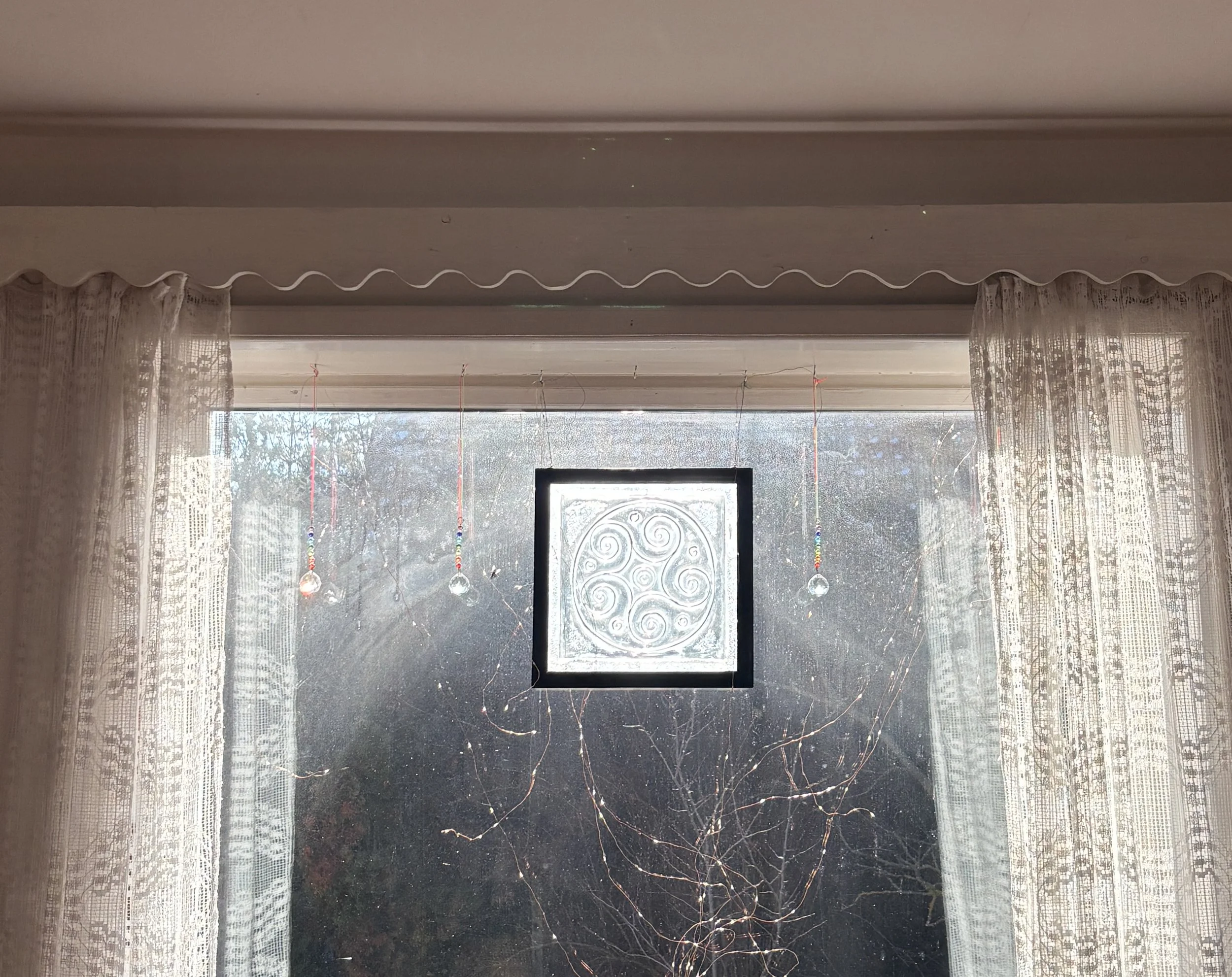
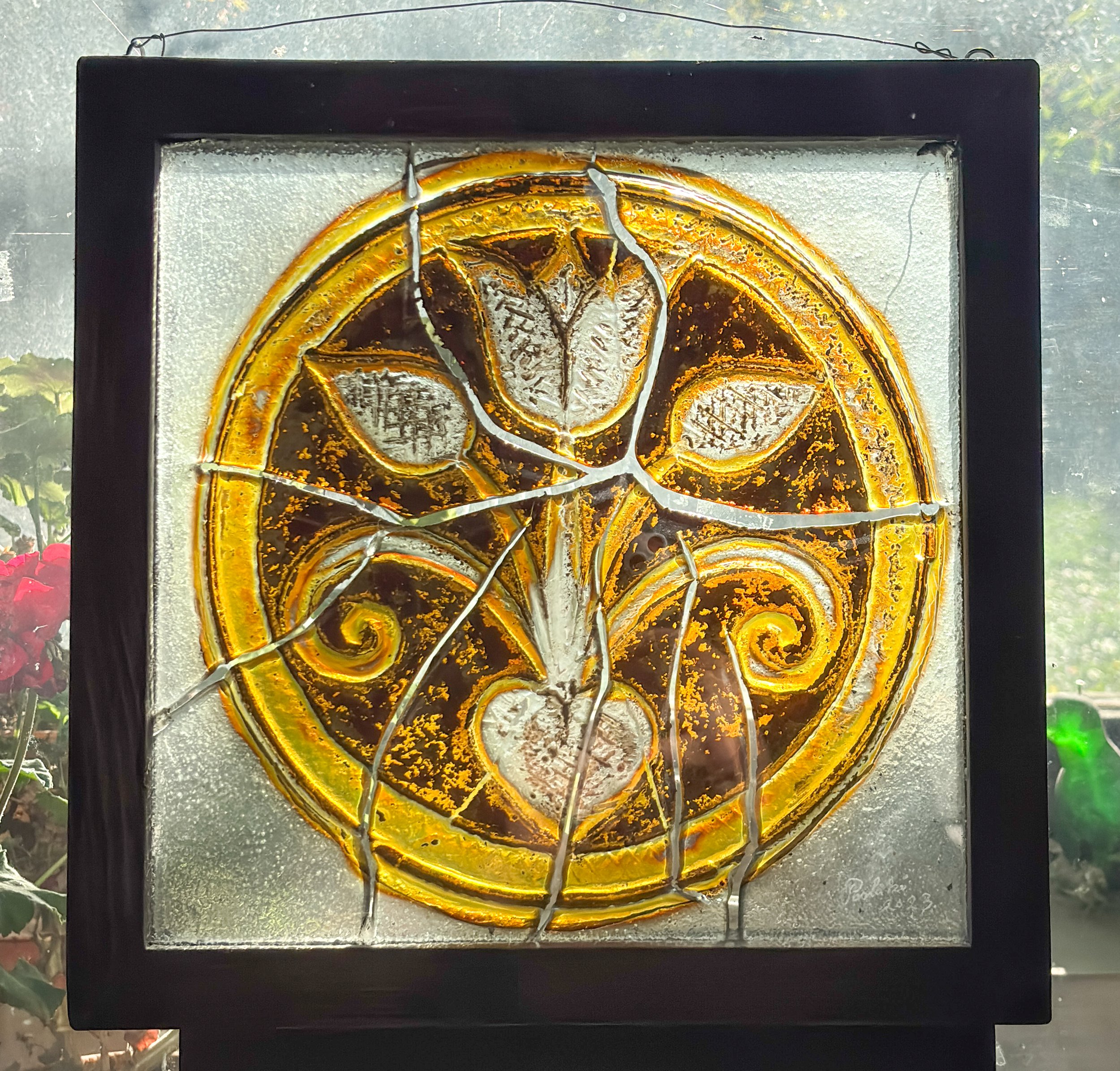
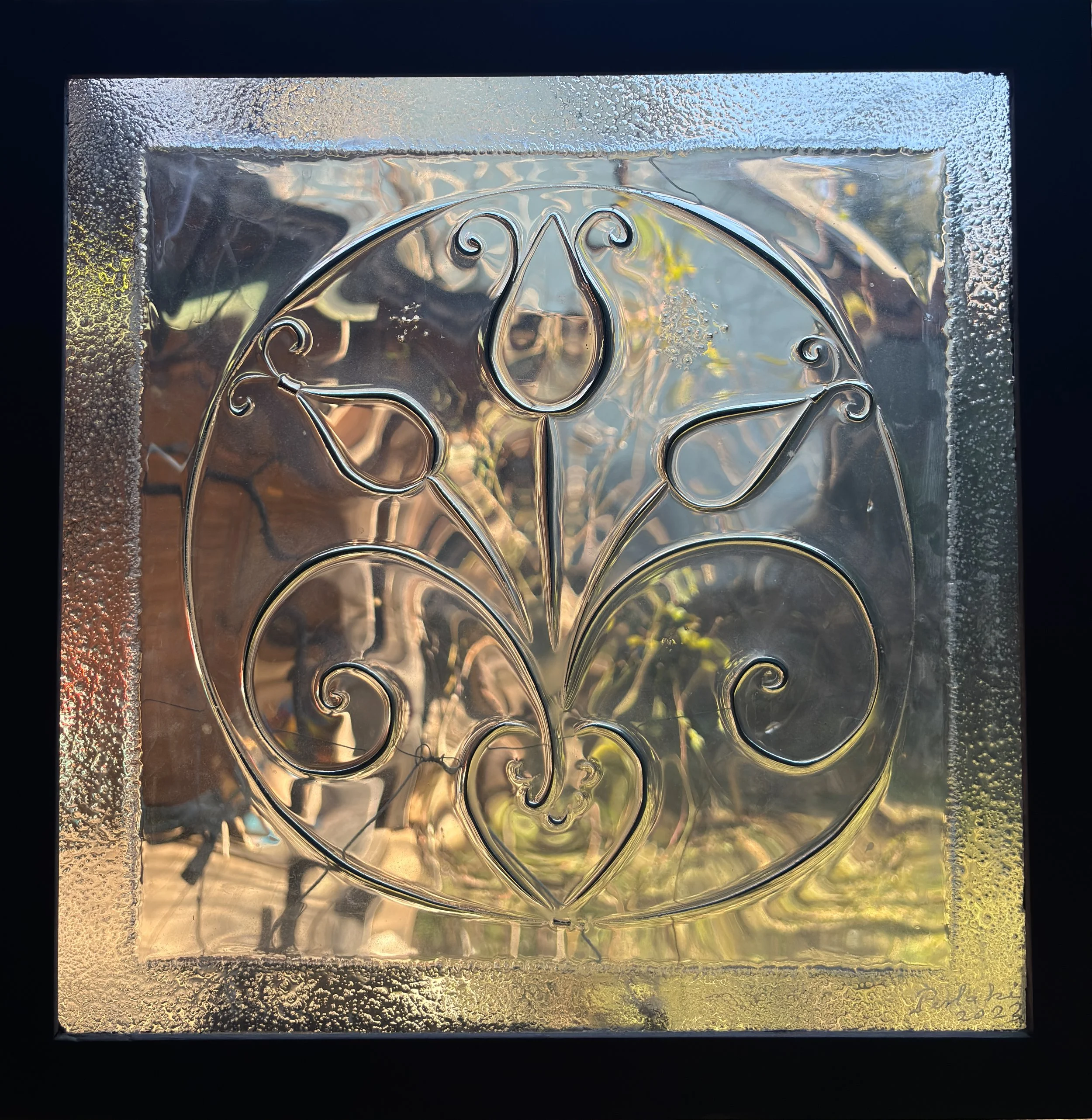
It’s not stained glass; it’s not sculpture. It’s both.
Üvegrogyasztás.
Here is a word that is hard to translate from Hungarian to English. Which is appropriate, for Glass Relief - our best way to bridge the language chasm - doesn’t quite fit in any predetermined art category.
Is it stained glass? Not quite. Is it sculpture? To a point.
The reality is that glass relief is a category unto itself, a beautiful blend of disciplines.
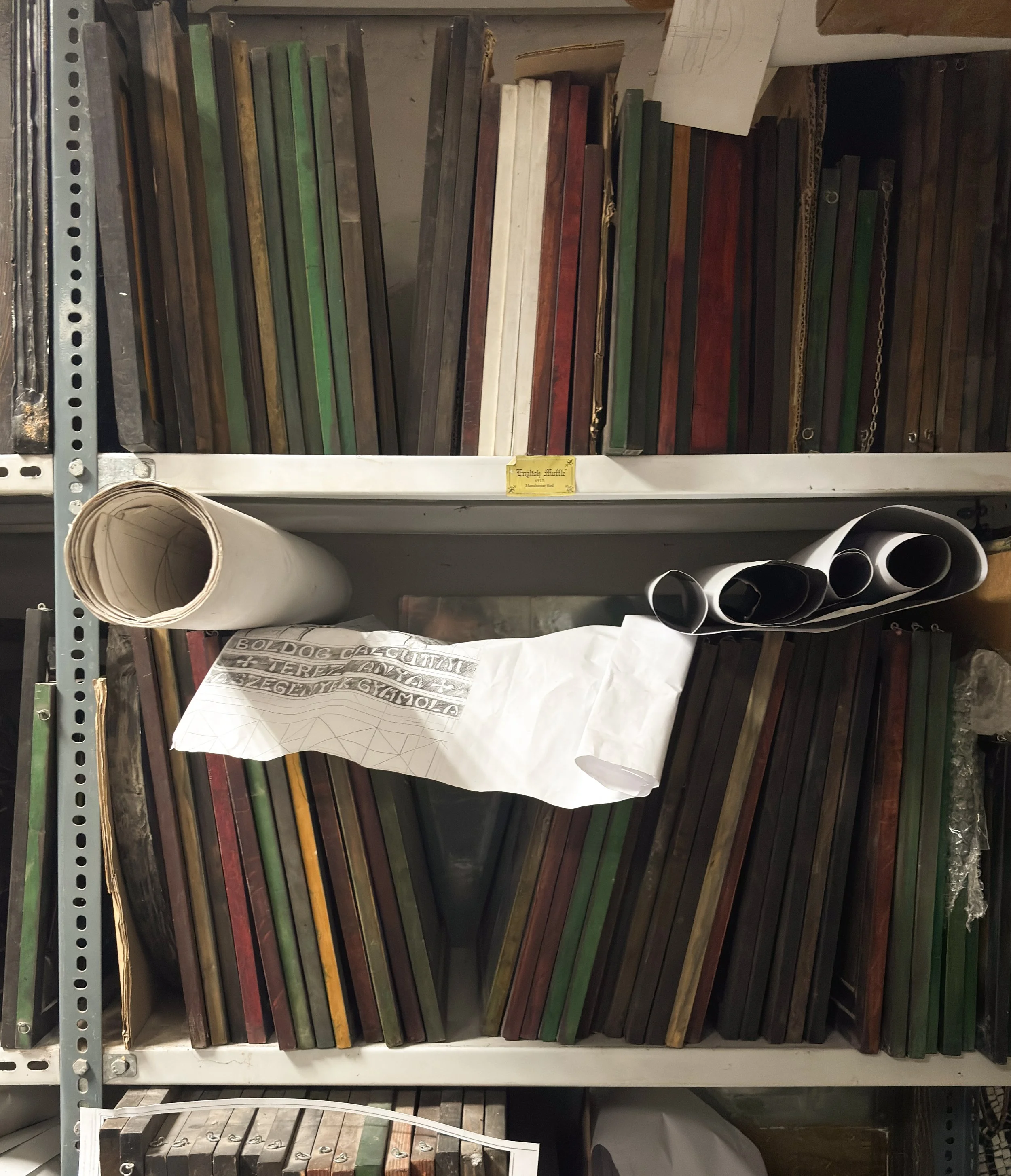
If you spend time in József’s atelier, you’re bound to see some clay shapes.
They are the start of the process for glass relief. Like bronze statues from Greek and Roman times, glass relief art is built from a clay cast, shaped in the desired form.
Plaster is then applied over the clay, molding in the shape to be.
Glass is then placed over the plaster and the ensemble is placed in a specialist oven. Heat will melt the glass which, upon solidifying, will take the form described by the clay cast.
This technique allows for the use of glass of different colours, so that the result is as different as possible.
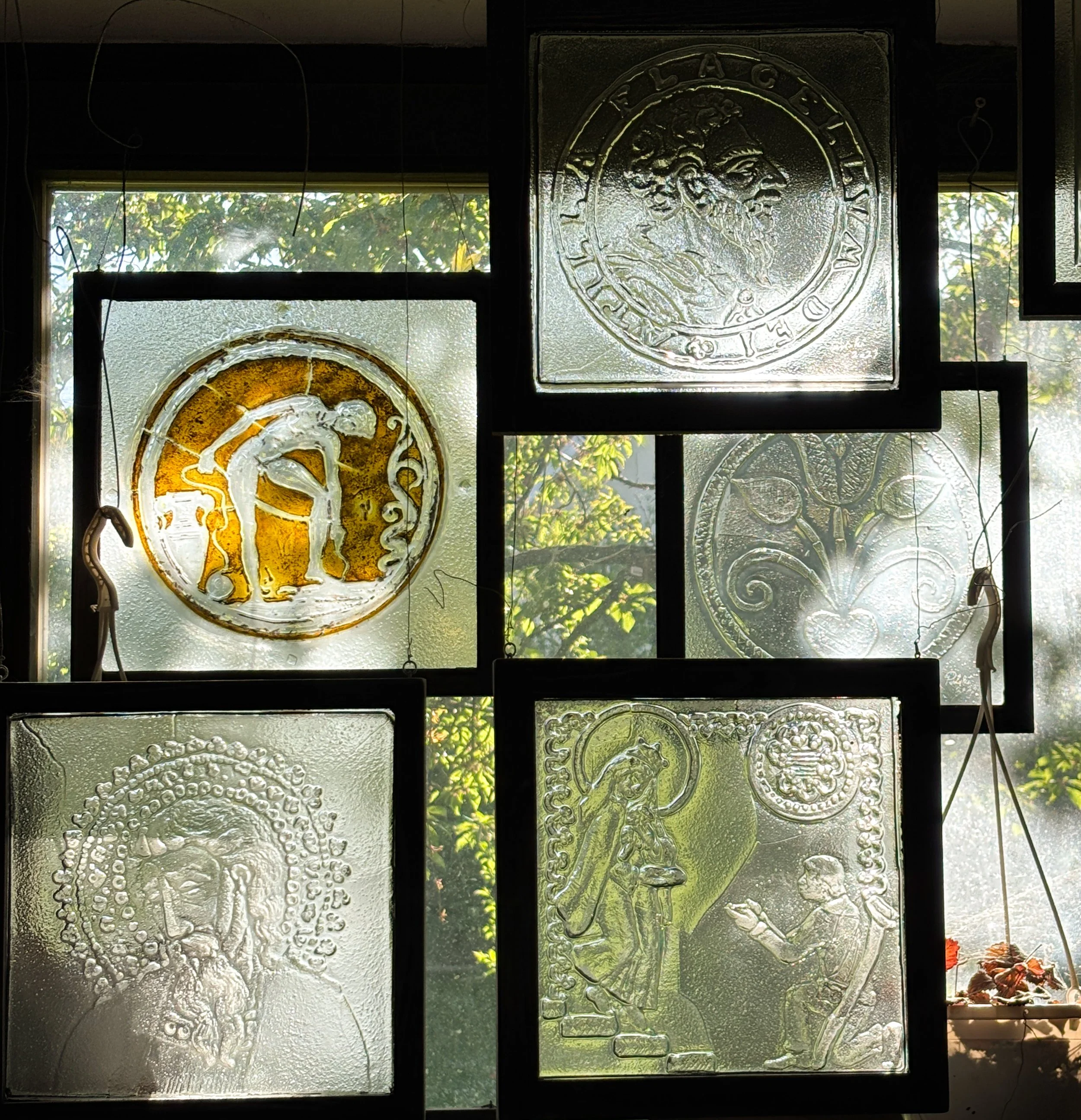
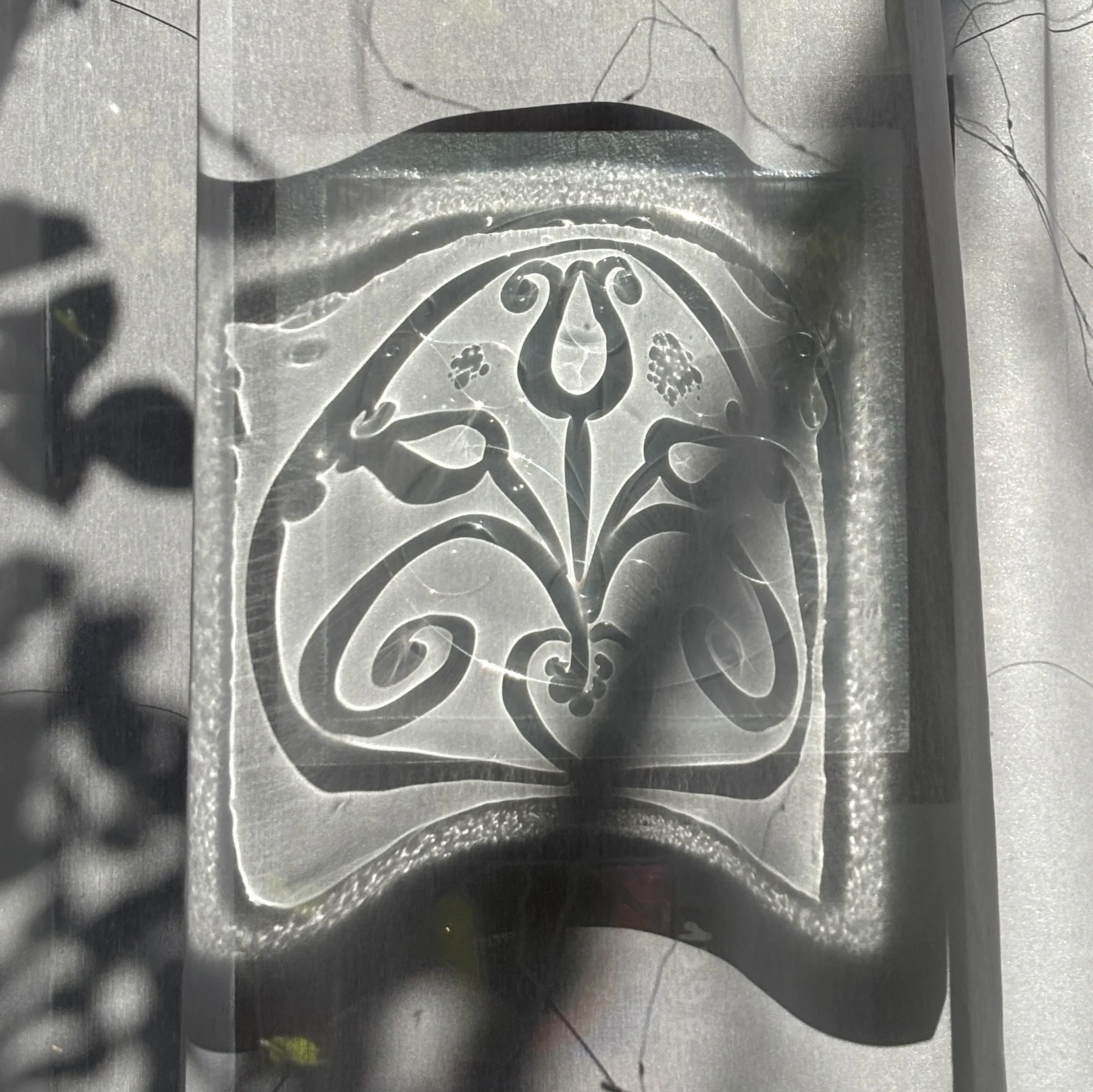
Glass relief offers countless opportunities. Colours, shapes, patterns: every art piece is a tri-dimensional canvas built to interact with the world. In József’s house, glass relief art dangles before every window, capturing the light and changing subtly every day of the year. Even when hidden behind a curtain.